
Side Dishes
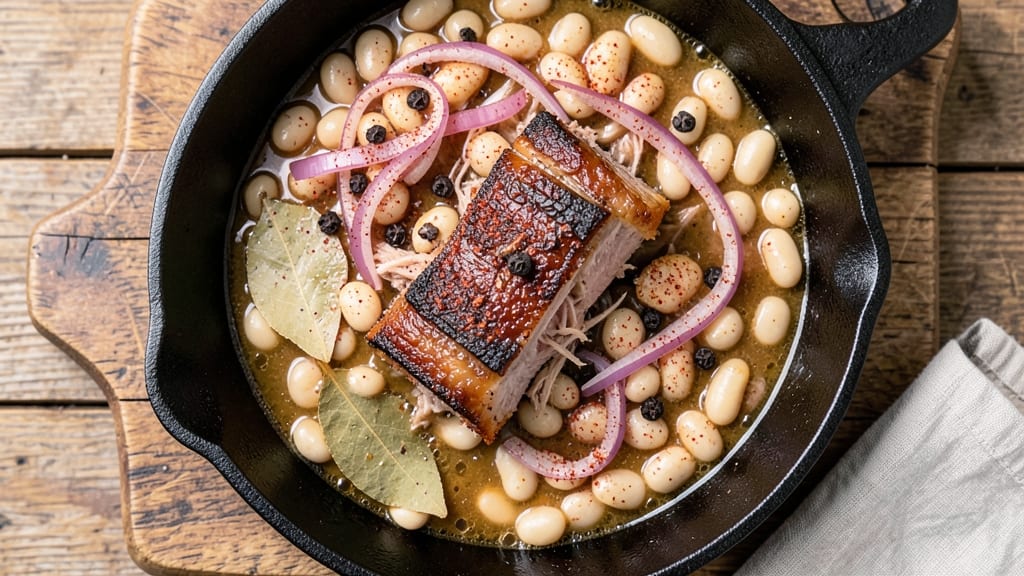
Transforming canned pinto beans into a rich, smoky side dish with ham hock unlocks restaurant-quality depth using pantry staples. The ham hock infuses collagen-rich flavor into the beans as they simmer, creating a dish that's both hearty and effortless to prepare.
I've perfected this technique through years of testing—balancing simplicity with professional results that deliver melt-in-your-mouth texture.
This recipe builds flavor through slow cooking, where the ham hock breaks down into tender, savory pieces that dissolve into the beans. No special equipment is needed beyond a pot and timer, though a pressure cooker cuts preparation time by half.
The result is a dish with deep, caramelized notes and a satisfyingly thick consistency that clings to every spoonful.
The final product delivers a velvety blend of beans and ham hock that's perfect alongside grilled meats or as a standalone meal. Each bite combines the earthy richness of pinto beans with the smoky, umami depth of slow-cooked ham. This method transforms simple ingredients into something truly memorable.
Pair with cornbread or crusty rolls to soak up every last drop of that flavorful broth. The recipe scales effortlessly for crowds, making it ideal for gatherings or meal prep. Let's create this comforting classic that feels like a hug in a bowl.
Ingredients for canned pinto beans and ham hock
Pantry staples meet smoky magic in this collagen-rich dish that transforms humble canned beans into restaurant-quality comfort.
| Ingredient | Amount | Notes |
|---|---|---|
| Canned Pinto Beans 🌾 | 4 cans | 15 oz each, drained and rinsed |
| Ham Hock 🍖 | 2 whole | Smoked preferred for depth |
| Yellow Onion 🧅 | 1 whole | Diced, medium size |
| Garlic Cloves 🧄 | 4 cloves | Minced, fresh preferred |
| Bay Leaves 🍃 | 2 whole | Dried, standard size |
| Smoked Paprika 🌶️ | 1 tbsp | For smoky depth |
| Ground Black Pepper 🌶️ | ½ tsp | Freshly ground preferred |
| Sea Salt 🧂 | 1 tsp | Kosher or coarse |
| Apple Cider Vinegar 🍎 | 1 tbsp | For brightness |
| Olive Oil 🫒 | 2 tbsp | Extra-virgin for richness |
| Fresh Thyme 🌿 | 2 sprigs | Or 1 tsp dried thyme |
| Chicken Broth 💧 | 2 cups | Low-sodium preferred |
| Brown Sugar 🍯 | 1 tbsp | Light or dark |
The ham hock is where the magic happens—look for smoked hocks at your butcher or specialty grocers like Whole Foods or Costco. These deliver that unmistakable smoky depth that separates home cooking from professional results. If you can't find smoked, unsmoked hocks work but add an extra 1/2 tbsp smoked paprika to compensate. The beans? Any 15 oz canned pinto beans will do—just drain and rinse thoroughly. For the onions, yellow onions work best, but red onions add subtle sweetness if you prefer. The garlic should be fresh—pre-minced jars lack the aromatic punch this dish deserves.
No smoked paprika? Substitute with liquid smoke (1/4 tsp) or extra black pepper (1/2 tsp). Fresh thyme unavailable? Dried thyme at one-third the amount works, but fresh is ideal. Running low on chicken broth? Substitute with water plus 1 tsp soy sauce for umami. The brown sugar can be omitted entirely if you're watching sugar, but it helps balance the acidity from the vinegar. For a vegetarian version, swap ham hock with 1 cup extra beans plus 1 tbsp soy sauce—though you'll lose that melt-in-your-mouth collagen richness. The apple cider vinegar is key for brightness, but lemon juice works in a pinch if that's what you have on hand.
This dish tastes even better the next day as flavors meld—make extra for leftovers. Store in an airtight container in the fridge for up to 5 days, or freeze portions for 3 months. The ham hock will become fork-tender after 2-3 hours of cooking, but it's worth waiting for that melt-in-your-mouth texture. For meal prep, double the recipe—the broth thickens beautifully when reheated, making it perfect for lunches. Serve with cornbread or crusty rolls to soak up every last drop of that collagen-rich broth—trust me, you'll want seconds.
Why You'll Love This Recipe
- No-Chop Night: I swear by this when I’m too tired to dice onions. Just toss the whole onion and a few smashed garlic cloves into the pot with the beans—no knife skills required. The ham hock does all the flavor work for you.
- Smoky Deep Umami: That ham hock? It’s the secret weapon. After simmering, it falls apart into rich, salty chunks that melt into the beans, giving you that slow-cooked, restaurant-worthy depth without the wait. Honestly, I’ll take this over any canned soup any day.
- Leftovers That Shine: This dish actually improves the next day. The flavors meld even more, and it’s perfect for quick lunches or tossing into tacos. I make a double batch on Sundays—my kids beg for it all week.
- Budget Magic: Canned beans and a ham hock stretch into a meal that feeds four for under $10. It’s my go-to when groceries feel tight, but somehow it still tastes like you put in effort. (Between us, it’s my best-kept secret.)
Step-by-step instructions for slow-cooked smoky pinto beans with ham hock
Transform simple pantry staples into a rich, smoky masterpiece with this hands-off method.
Prepare the Ham Hock and Aromatics
Rinse the 2 whole ham hock under cold water and pat completely dry with paper towels. This step is crucial—any moisture will prevent proper browning. Place them in a large Dutch oven or heavy pot and set aside. In a small bowl, combine the 1 tablespoon smoked paprika, 0.5 teaspoon ground black pepper, and 1 teaspoon sea salt. This dry rub will infuse the broth with deep, smoky flavor.
Heat the 2 tablespoons olive oil in the same pot over medium heat until shimmering. Add the diced 1 whole yellow onion and cook for 5-6 minutes until softened and golden. Stir in the 4 minced garlic cloves and cook for an additional 30 seconds until fragrant. This aromatic base forms the flavor foundation for the entire dish.
Build the Flavor Base
Add the 2 whole bay leaves and 2 sprigs fresh thyme to the pot. Pour in the 2 cups chicken broth and bring to a gentle simmer. Let it reduce slightly for 2-3 minutes until the liquid is just bubbling around the edges. This step concentrates the flavors before adding the beans.
Place the ham hock in the simmering broth, along with the 1 tablespoon brown sugar and 1 tablespoon apple cider vinegar. The vinegar adds brightness that cuts through the richness, while the sugar helps caramelize the onions and beans. Bring everything to a full boil, then reduce heat to low and let it simmer uncovered for 15 minutes. This initial cooking time allows the ham hock to begin rendering its collagen-rich juices.
Add the Beans and Simmer Low and Slow
Drain and rinse the 4 cans canned pinto beans to remove excess sodium. Add them to the pot along with the dry rub mixture. Stir gently to combine, ensuring the beans are fully coated in the flavorful broth. The beans should be mostly submerged, but don't worry if they're not completely covered—they'll absorb liquid as they cook.
Return the heat to low and cover the pot with a tight-fitting lid. Let the beans simmer gently for 45-60 minutes, stirring occasionally. You're looking for the beans to become tender but still hold their shape, while the ham hock becomes fork-tender and begins to fall apart. The broth should reduce to a thick, saucy consistency that coats the back of a spoon. If it reduces too quickly, add ¼ cup water to maintain the proper texture.
Finish and Rest for Maximum Flavor
Once the beans are tender and the ham hock is easily shredded with a fork, remove the pot from heat. Let the entire mixture rest covered for 15 minutes. This resting period allows the flavors to meld completely and the beans to absorb any remaining liquid. During this time, the ham hock will continue to render its juices, creating an even richer sauce.
Before serving, taste and adjust seasoning if needed. The beans should be seasoned perfectly with the smoky, savory depth from the ham hock and the bright acidity from the vinegar. Serve immediately with crusty bread or over rice to soak up every last bit of that flavorful broth. The result is a hearty, comforting dish that's packed with protein and rich, smoky flavor.
Pro Tips For Making Canned Pinto Beans And Ham Hock
- Simmer the Ham Hock First: Toss that ham hock into a pot of cold water with a splash of vinegar or lemon juice before boiling—it’ll pull out more flavor into the broth instead of waiting until everything’s hot. I used to skip this, and the beans always tasted like they were missing something.
- Drain and Rinse Those Beans: Open the can and give the pinto beans a quick rinse under cold water, even if they’re labeled “no salt added.” Canned beans hold onto starch like a lifeline, and that’s the fastest way to turn your stew into glue. Trust me, your spoon will thank you.
- Char the Onion, Not Just Sauté: Walk away from the pan after the onion softens—let it darken and crisp at the edges for 3-4 minutes. That caramelized bitterness cuts through the richness of the ham hock and makes the whole dish taste deeper. Yes, it’ll look a little scary, but it works.
- Crumble the Ham, Don’t Shred: Once the ham hock’s cooked through, pull it out and let it cool for 10 minutes before handling. Use your fingers to break it into rough, uneven chunks—not thin shreds. Big pieces stay juicier and dissolve into the beans in a way that adds real depth, not just salt.
Flavor customization for this dish
Smoky Heat Level
Adjust the smokiness to your taste by controlling the smoked paprika and ham hock intensity. For mild smokiness, reduce smoked paprika to ½ tablespoon and use unsmoked ham hock with ½ teaspoon liquid smoke added later.
For bold smokiness, increase smoked paprika to 2 tablespoons and add 1 extra smoked hock—just be sure to simmer longer to tenderize the meat. 🌶️
Sweet-Savory Balance
The brown sugar and apple cider vinegar create a perfect sweet-tangy contrast. For a sweeter profile, add ½ teaspoon cinnamon or 1 teaspoon molasses to deepen the caramel notes.
For more tang, increase vinegar to 2 tablespoons or add 1 teaspoon Dijon mustard for complexity. Taste as you go—this balance is key to restaurant-quality depth.
Spicy Kick Options
Add heat with ½ teaspoon cayenne pepper for a mild kick or 1 teaspoon chili powder for earthy warmth. For fiery flavor, stir in 1-2 diced jalapeños (seeds removed) during the final 10 minutes of simmering.
If you love smoky-spicy, combine 1 teaspoon smoked paprika with ½ teaspoon chipotle powder—this fusion is inspired by Texas-style barbecue. 🔥
Herb Variations
Swap or add herbs to customize the aroma. For Mediterranean flair, include 1 sprig rosemary and ½ teaspoon oregano. For Southern comfort, add 1 bay leaf (already in the recipe) and ½ teaspoon thyme.
Fresh herbs like cilantro or parsley brighten the dish—add them at the end if using. Dried herbs work too, but use half the amount of fresh.
Umami Boosters
Elevate the savory depth with umami-rich ingredients. Stir in 1 tablespoon soy sauce or 1 teaspoon fish sauce for a bold, salty punch. For meaty richness, add 1 cup cooked diced ham or 2 slices bacon (crumbled) during the last 20 minutes of cooking.
Mushrooms also work—sauté 1 cup sliced cremini mushrooms with the onions for an earthy twist. 💫
Texture Tweaks
Adjust the final texture to your preference. For chunkier beans, use 1 can each of pinto and black beans—the contrast adds visual and textural appeal. For creamy texture, mash ½ the beans lightly with a fork before serving.
For crunch, top with toasted pepitas or crumbled bacon just before eating. The ham hock’s collagen naturally thickens the broth, but you can thin it with ¼ cup water if needed.
Nutrition facts
Frequently asked questions
Why does this recipe use canned pinto beans instead of dried?
Canned beans save pre-soaking time (8+ hours) and deliver consistent texture, while dried beans require overnight soaking and longer cooking. The canned version still develops deep flavor from the ham hock's collagen and spices—just skip the rinsing if you prefer a saltier result. For dried beans, add 1 extra cup broth and simmer 1 hour longer.
Can I make this recipe in a slow cooker or Instant Pot?
For a slow cooker, combine all ingredients (except fresh herbs) and cook on low for 6-8 hours or high for 3-4 hours. For an Instant Pot, sauté aromatics first, then add remaining ingredients and pressure cook for 20 minutes on high. Release pressure naturally for 10 minutes before opening. The ham hock will break down beautifully in both methods.
What if my ham hock isn't fully tender after cooking?
Simmer uncovered for 30-60 more minutes on low heat, adding ¼ cup water every 20 minutes to prevent burning. If it's still tough, shred it and stir back into the beans—the flavor will still infuse the broth. For next time, look for smaller ham hocks (1-2 lbs), which tenderize faster than large ones. Never rush this step!
How can I make this dish vegetarian?
Replace the ham hock with 1 cup extra beans plus 1 tbsp soy sauce or 1 tsp liquid smoke for depth. Add 1 cup diced mushrooms (sautéed first) and 1 tbsp tomato paste for umami. The texture will be less rich, but the smoky-savory profile remains. For protein, stir in ½ cup cooked lentils at the end.
Can I freeze the leftovers?
Yes! Cool the beans completely, then store in an airtight container for up to 3 months. Thaw overnight in the fridge, then reheat on the stove with 2 tbsp water to restore moisture. The ham hock may separate slightly, but the flavor remains intact. For best texture, reheat gently over low heat for 5-10 minutes.