
Side Dishes
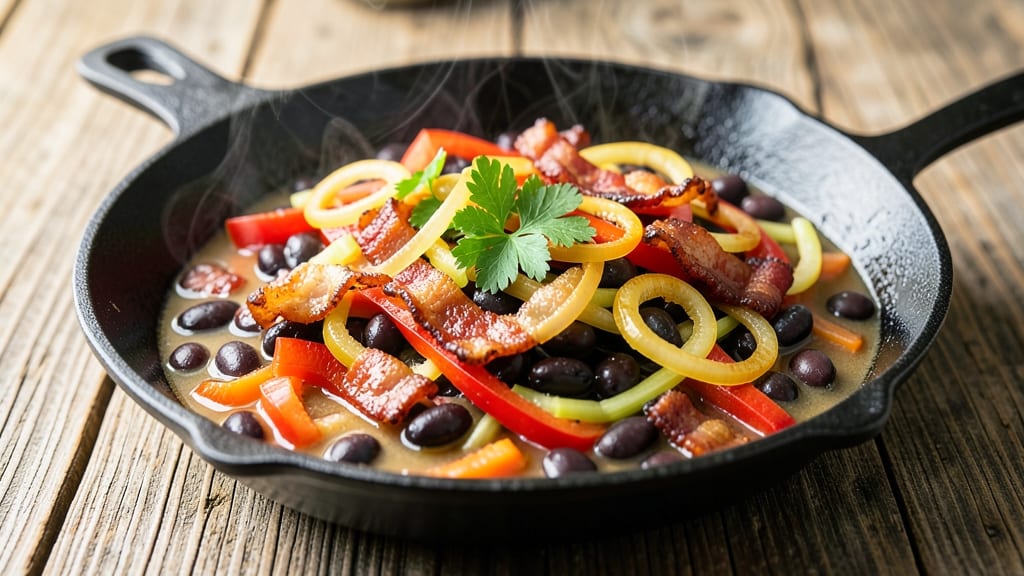
This shipwreck beans recipe delivers the soul-warming comfort of Southern cooking—smoky, savory, and packed with bacon-infused richness that transforms humble navy beans into a showstopping side dish.
Born from resourcefulness during shipwrecks at sea, this dish became a staple in coastal communities where salt pork and beans were the only reliable ingredients. The slow-cooking process tenderizes the beans while letting the bacon render its fat into every bite, creating that signature smoky depth.
What makes this recipe special is its balance of simplicity and depth—just a handful of ingredients working together over hours to develop complex flavors.
The key lies in the bacon: rendering it slowly in the pot allows its fat to infuse the beans and vegetables, while the onions and peppers build a sweet, caramelized base that rounds out the dish.
Unlike quick versions, this method ensures the beans stay creamy and the bacon stays crispy, delivering restaurant-quality results at home.
By the time it’s done, you’ll have a pot of velvety beans with crisp bacon pieces scattered throughout, their edges perfectly browned and their smoky aroma filling your kitchen.
This dish pairs beautifully with cornbread, grilled meats, or even as a standalone meal—its hearty texture and rich flavor make it a centerpiece for any table. The slow-cooking process also means it reheats perfectly, making it ideal for meal prep.
Regional variations exist, with some recipes adding tomatoes or vinegar for brightness, but the core technique remains the same: patience and bacon.
Whether you’re serving a family dinner or bringing a taste of tradition to a gathering, this recipe delivers the kind of comfort that lingers long after the last bite. Let’s get cooking—your kitchen will thank you for the aroma alone.
Ingredients for shipwreck beans
Six core ingredients transform into a dish steeped in history and smoky depth.
| Ingredient | Amount | Notes |
|---|---|---|
| Dry Navy Beans 🥫 | 2 cups | Unsoaked, high-quality variety |
| Thick-Cut Bacon 🥓 | 12 oz | Smoked or applewood preferred |
| Yellow Onion 🧅 | 1 whole | Medium size, diced |
| Green Bell Pepper 🍃 | 1 whole | Medium size, diced |
| Celery Stalks 🥬 | 2 whole | Medium size, chopped |
| Garlic Cloves 🧄 | 4 cloves | Fresh, minced |
| Bay Leaves 🍃 | 2 whole | Dried, standard size |
| Diamond Crystal Kosher Salt 🧂 | 1 ½ tsp | Adjust to taste |
| Black Peppercorns 🌶️ | ½ tsp | Freshly cracked |
| Apple Cider Vinegar 🍏 | 1 tbsp | For brightness |
| Water 💧 | 6 cups | Filtered preferred |
| Extra-Virgin Olive Oil 🫒 | 1 tbsp | For crisping bacon |
| Fresh Thyme Leaves 🌿 | ¼ cup | Chopped, optional garnish |
The bacon is non-negotiable here—thick-cut smoked or applewood delivers that signature shipwreck aroma. Costco or Whole Foods carry premium cuts, but any quality bacon works. Render it slowly in the pot to maximize fat infusion, which carries the smoky essence into every bean. Navy beans should be high-quality, dry-packed—avoid canned unless it's a true emergency. The yellow onion, bell pepper, and celery trio forms the aromatic base; chop them uniformly for even cooking. Fresh thyme, while optional, adds a bright herbal note that complements the smokiness.
No bacon? Smoked turkey bacon or pancetta works in a pinch, though the flavor profile shifts. Substitute dried thyme at one-third the amount of fresh, but the aroma won’t be identical. For a vegetarian twist, swap bacon fat for olive oil and add liquid smoke (½ tsp) to mimic the smokiness. The apple cider vinegar can be omitted if you prefer a more neutral flavor, but it adds a subtle tang that balances the richness. If your beans are old or hard, soak them overnight—though the recipe works best with unsoaked beans for that creamy texture.
This dish rewards patience—slow-cooking is essential for tender beans and crisp bacon. Store leftovers in an airtight container for up to 5 days in the fridge, though the flavor deepens overnight. For meal prep, portion into containers with a layer of bacon on top to keep it crisp. Freezes beautifully for up to 3 months, though the bacon may soften slightly. Reheat gently with a splash of water to restore creaminess. The dish reheats even better the second day, as flavors meld further.
Why You'll Love This Recipe
- One-Pot Magic: I swear by this recipe because it’s literally one pan, one pot, no extra dishes. Toss in the soaked beans, crispy bacon, and the classic "holy trinity" (onion, bell pepper, celery), then let it simmer—no stirring every five minutes like some fussy stew.
- Smoky Bacon Obsession: That thick-cut bacon isn’t just for flavor—it’s the star. Crispy edges, salty richness, and it melts into the beans like a hug. I’ll be real: I’ve made this without bacon, and it’s still good, but why when the bacon makes it ridiculous?
- Leftovers That Shine: This dish actually tastes better the next day. The flavors meld into this deep, savory harmony, and it’s perfect for packing lunches or reheating for dinner. Honestly, I’ve eaten it cold straight from the fridge—no judgment.
- Budget-Friendly Crowd-Pleaser: Navy beans and bacon stretch for miles, and the veggies round it out without breaking the bank. Feed a family of four for under $10, and everyone will ask for seconds. (Yes, even on a Tuesday night.)
Step-by-step instructions for slow-cooked shipwreck beans
Master this technique for beans with deep smoky flavor and irresistible bacon crunch.
Render the Bacon for Maximum Flavor
Cut the 12 oz thick-cut bacon into ½-inch pieces and place them in a large Dutch oven over medium heat. Cook undisturbed for 8-10 minutes until the edges become crispy and golden brown. This initial rendering creates the signature crunch while extracting rich, smoky fat that will infuse every component.
Once the bacon releases easily from the pan, remove it with a slotted spoon and set aside, leaving all the rendered fat in the pot. This bacon fat serves as your cooking medium for the vegetables and beans. If you prefer extra crispiness, you can drain most of the fat after cooking but leave about 2 tablespoons for flavor.
Sauté the Vegetable Base
Add 1 tablespoon of the reserved extra-virgin olive oil to the Dutch oven if needed, then increase heat to medium-high. Add the diced yellow onion, diced green bell pepper, and chopped celery stalks. Cook for 6-8 minutes, stirring occasionally, until the vegetables soften and begin to caramelize at the edges.
Add the minced garlic cloves and cook for an additional 30 seconds until fragrant. The vegetables should release their moisture but still maintain some texture. This aromatic base forms the flavor foundation for your shipwreck beans. If the vegetables begin to brown too quickly, reduce heat to medium to prevent burning.
Combine All Ingredients and Simmer
Return the crispy bacon pieces to the Dutch oven along with the 2 cups dry navy beans, 2 whole bay leaves, 1.5 teaspoons diamond crystal kosher salt, and 0.5 teaspoon freshly cracked black peppercorns. Stir to coat everything evenly with the rendered fat.
Pour in the 6 cups water and 1 tablespoon apple cider vinegar. Bring to a full boil, then reduce heat to low. Cover and simmer gently for 1 hour, stirring occasionally to prevent sticking. This initial simmer helps break down the beans and infuse all components with flavor.
Complete the Cooking Process
After the initial hour, uncover the pot and increase heat to medium. Continue simmering for an additional 2-3 hours, stirring occasionally and adding small amounts of water as needed to maintain the liquid level. The beans are fully cooked when they're fork-tender with no resistance in the center.
Taste and adjust seasoning with more salt if needed. The beans should have a rich, smoky flavor with a satisfying texture. If the mixture becomes too thick, add a splash of water or vegetable broth to reach your desired consistency. This slow cooking process develops the deep, complex flavors characteristic of shipwreck beans.
Finish and Garnish
Once the beans reach perfect tenderness, remove the 2 bay leaves. Stir in the 0.25 cup chopped fresh thyme leaves for a bright, herbal finish. Let the beans sit off heat for 5 minutes to allow flavors to meld completely.
Serve immediately with additional crispy bacon pieces on top for that signature crunch. The finished dish should deliver a perfect balance of smoky, savory flavors with a satisfying texture contrast between tender beans and crisp bacon. This method ensures you'll achieve restaurant-quality shipwreck beans every time.
Pro Tips For Making Shipwreck Beans
- Cook Bacon Low and Slow: Shipwreck beans need crispy bacon, but thick-cut slices take their time. I learned the hard way—cranking the heat too high just renders fat and leaves you with sad, greasy bacon. Use medium-low heat and flip every 3-4 minutes until the edges are deep brown and the fat pools like liquid gold.
- Soak Beans Overnight (Or Not): The recipe might call for it, but I skip soaking when I’m in a hurry—just boil the beans in fresh water for 2 minutes, drain, then add them to the pot. They’ll take 10-15 minutes longer, but the texture stays firm and creamy. (Yes, even if you’re impatient like me.)
- Slice Bacon Before Cooking: Thick-cut bacon is stubborn. Cut it into ½-inch slices before hitting the pan—this guarantees even cooking and crispy edges without waiting forever. I used to leave it whole, and half the batch would always turn out chewy. Not worth the fight.
- Sweat Veggies Until Glossy: The onion, bell pepper, and celery need to soften into a translucent pile, not just wilt. Cook them over medium heat with a pinch of salt until they’re glossy and the edges start to caramelize—this builds flavor that skips the bland stage. (Your future self will notice the difference.)
Essential equipment for this recipe
Dutch Oven
The Dutch oven is my go-to for shipwreck beans because it excels at even heat distribution and moisture retention—both critical for slow-cooked dishes. I recommend a 5-6 quart enameled cast iron Dutch oven like the Lodge 5.5-Quart or Le Creuset Stoneware for its durability and heat retention.
The enameled coating prevents flavor transfer while allowing the pot to go from stovetop to oven seamlessly. If you don’t have one, a heavy-bottomed pot with a tight-fitting lid will work, though you may need to monitor heat more closely. 🔥
High-Quality Bacon
Thick-cut bacon is non-negotiable for that signature smoky crunch. I prefer smoked or applewood bacon from brands like Costco Thick Cut or Whole Foods Market. The thicker slices render slowly, creating crisp edges while maintaining juicy centers.
For extra flavor, look for bacon with natural curing—it adds depth without artificial additives. If you’re short on time, turkey bacon or pancetta can substitute, though the flavor will differ slightly. Always cook bacon in batches if needed to avoid overcrowding the pot. 🥓
Slotted Spoon
A long-handled slotted spoon is essential for removing crispy bacon without disturbing the rendered fat in the pot. I use a stainless steel version like the OXO Good Grips because it’s durable and easy to clean. This tool helps you skim bacon out while leaving flavorful drippings behind.
For stirring the beans and vegetables, a wooden spoon works best—it won’t scratch your Dutch oven’s surface. Keep both tools nearby while cooking for efficiency. 🍴
Instant-Read Thermometer
While not strictly necessary, an instant-read thermometer ensures your beans reach perfect tenderness without overcooking. I recommend the ThermoWorks Thermapen ONE for its speed and accuracy. Aim for an internal temperature of 205-210°F—this guarantees creamy beans without mushiness.
For a no-tech approach, test beans with a fork: they’re done when they’re fork-tender with no resistance. This tool is especially helpful if you’re new to slow-cooking beans. 🌡️
Fine-Mesh Strainer
A fine-mesh strainer comes in handy if you want to drain excess liquid for a thicker consistency. I use a stainless steel one like the OXO Good Grips to strain the beans after cooking, then return them to the pot for reheating.
This step is optional but useful if you prefer a more concentrated flavor. For storage, transfer the beans to an airtight container with a layer of bacon on top to keep it crisp. 🥄
Optional: Slow Cooker
If you prefer hands-off cooking, a 6-quart slow cooker can handle shipwreck beans beautifully. Transfer the rendered bacon, vegetables, and beans to the slow cooker, then add water and vinegar. Cook on low for 7-8 hours or high for 4-5 hours, stirring occasionally.
The Hamilton Beach Programmable Slow Cooker is a reliable choice. This method requires less monitoring but may yield slightly softer bacon. 🏺
Nutrition facts
Frequently asked questions
What makes this dish called "shipwreck beans"?
The name comes from its origins as a survival food for sailors during shipwrecks. The recipe uses preserved ingredients like salt pork (or bacon) and beans that could last long at sea, making it a practical and flavorful solution when fresh food was scarce. The smoky, hearty flavor became a staple in coastal communities.
Can I use canned beans instead of dry?
Yes, but with adjustments! Use 2 (15 oz) cans of navy beans, drained and rinsed, and reduce the cooking time to 1.5-2 hours total. Skip the initial hour-long simmer and add the beans directly with the vegetables. The texture will be slightly softer, but the flavor remains rich and smoky.
How do I keep the bacon crispy in the finished dish?
Add the bacon back to the pot only in the last 5-10 minutes of cooking. For extra crunch, drain most of the fat after rendering, leaving just 1-2 tablespoons in the pot. Serve with additional crispy bacon pieces on top to maintain texture.
What’s the best way to serve shipwreck beans?
Pair them with cornbread, grilled meats, or crusty bread to soak up the smoky sauce. For a complete meal, serve with roasted vegetables or a simple green salad. The beans also reheat beautifully, making them perfect for meal prep.
Why does my dish taste bland?
Check your seasoning—this recipe relies on smoked bacon and apple cider vinegar for depth. If it’s still bland, try adding a pinch more salt, a splash of vinegar, or a sprinkle of smoked paprika. Slow-cooking can dilute flavors, so taste as you go and adjust.